
Is It a Dead Cat Bounce or the Bull Market Revival? How Do Traders View It?

 Prefer us on Google


Is this a bull market or an illusion?
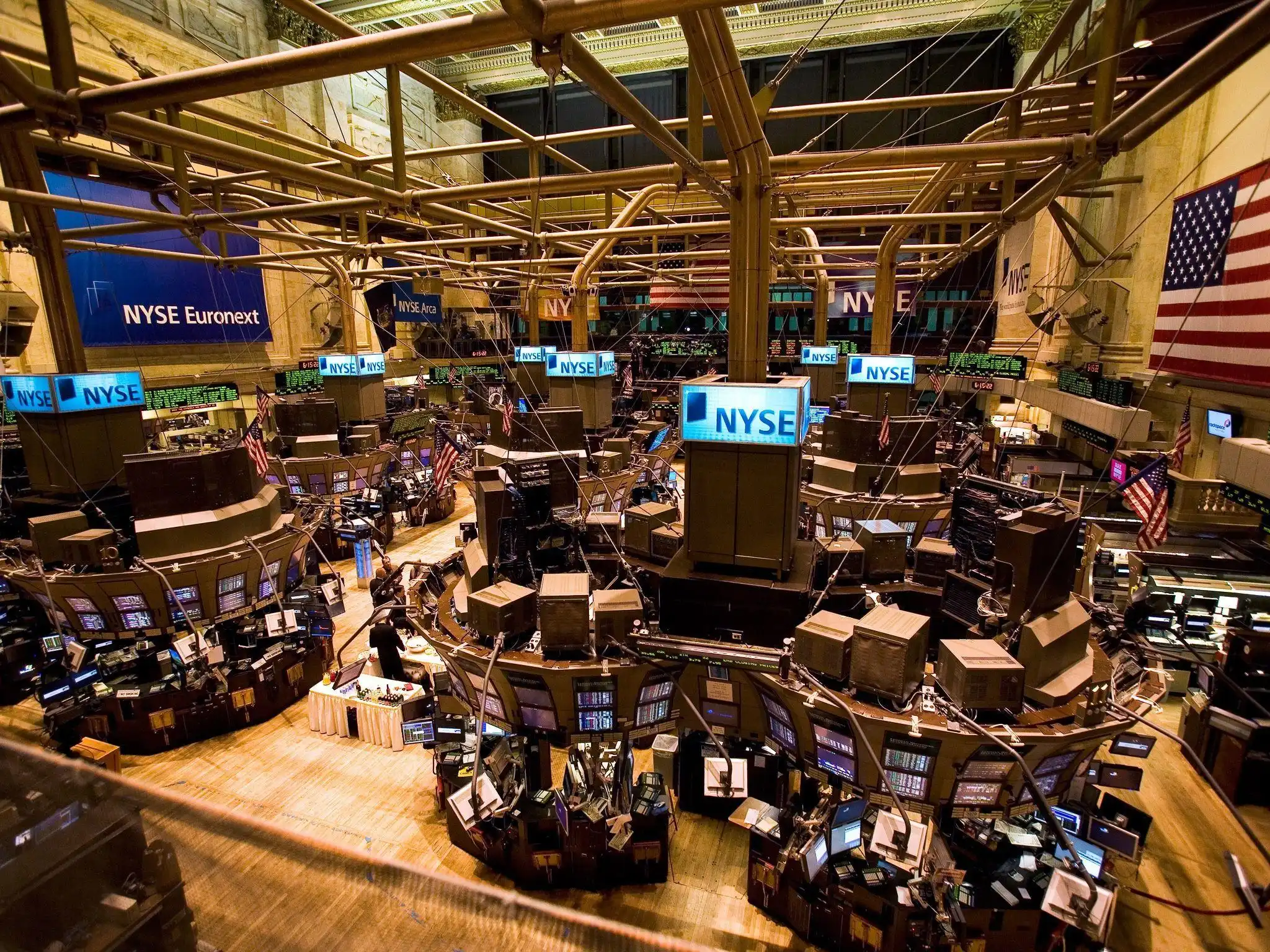
The S&P 500 has rebounded nearly 10% from its March 27 low, the Nasdaq has seen a ten-day winning streak, setting a record for the longest consecutive gains in 2021. Bitcoin has reclaimed $76,000, and stocks related to cryptocurrency have surged across the board. Just as everyone was still discussing whether the war would drag down the economy, the market quietly staged a beautiful V-shaped recovery.
This time, has the bull market truly returned, or is it just a rebound? There is also quite a bit of disagreement among Wall Street's top strategists.
Bullish Camp: The Bottom Has Been Confirmed
Tom Lee is one of the most bullish proponents of this rebound. He said in an interview with CNBC that the US-Iran ceasefire agreement has eliminated the possibility of a large-scale bombing, implying that the US stock market has "established a bottom." His logic is not complicated: if the S&P 500 can reclaim its 200-day moving average, the market will likely see a "decisive breakout to the upside."
Senior strategist Ed Yardeni's assessment is more straightforward. He maintains that the S&P 500 bottomed on March 30, with a year-end target of 7700 points, implying a roughly 11% increase from current levels. In an interview with Fortune, he made an intriguing statement: "Pessimism is now outdated." He even admitted that there are too many bulls, which has made him a bit uneasy.
Now let's look at Goldman Sachs' assessment.
They have characterized the current stage as a "marathon-like expansion," transitioning from the dominance of large-cap tech stocks to a broad rotation into cyclical and industrial stocks. The year-end target remains at 7600 points, based on a "fundamental bottom" formed by a 12% earnings per share growth, which can limit downside risks even amid macro volatility. Peter Oppenheimer, Goldman Sachs' Global Chief Equity Strategist, further stated in an April 7 report that there may be a buying opportunity at a discount for US tech stocks, and AI investment spending will contribute to around 40% of the S&P 500's earnings per share growth.
Earnings season is also heading in this direction. FactSet predicts a 13.2% year-over-year earnings growth for the first quarter, while Barclays has raised its full-year 2026 earnings per share forecast to $321. Analysts had previously lowered their expectations, and now the classic "low expectations, high results" combination has emerged, which has historically served as the catalyst for the next wave of gains.
Morgan Stanley's view aligns closely with Goldman Sachs. Morgan Stanley points out that historically, bull markets usually last five to seven years, and in the fourth year of a bull market, there has always been positive returns. They believe that the AI-driven productivity revolution has not truly spread beyond large-cap tech stocks, and once this diffusion occurs, it will inject new fuel into the bull market.
The Bears Don't See It That Way
But not everyone is celebrating.
Bank of America's Chief Investment Strategist Michael Hartnett is the loudest bearish voice in this debate. In March's global fund manager survey, Hartnett pointed out that the current market positioning indicator is "nowhere near the super-bear levels of recent major lows." He compared four historical bottoms: the April 2025 tariff shock, the Russia-Ukraine war, the COVID crash, and the 2011 U.S. debt downgrade. Each time, market indicators were more extremely pessimistic than they are now. His conclusion is that the real bottom often occurs after true capitulation, and that moment has not yet arrived.
Specific data support his caution: institutional investors are still 37% overweight in stocks; cash levels are only at 4.3%, well below the 5% buy signal threshold; market breadth remains positive. At every true major bottom in history, these three indicators have pointed in the other direction.
He also pulled out a more pessimistic data comparison: between 2007 and 2008, oil prices rose from $70 to $140 while the subprime crisis was quietly brewing beneath the surface. Since the Iran war outbreak, oil prices have risen over 60%. Hartnett believes that this kind of rise does more actual harm to corporate profits than inflation data itself, and does so sooner and deeper.
Additionally, even Goldman Sachs's own trading desk had a different tone. Goldman Sachs's Delta One business head Rich Privorotsky's assessment is more cautious: if oil prices remain above pre-war levels, this rally looks more like a technical rebound of short covering rather than a chase-worthy trend. He said the market's ultimate arbiter is one thing: actual tanker flows through the Strait of Hormuz, and this data takes time to validate.
Piper Sandler's Chief Investment Strategist Michael Kantrowitz has a more extreme attitude. He stated that in the past five years, uncertainty has been very high, investors have become very short-sighted, and consensus shifts often only require a few triggering factors. As a result, he has outright stopped publishing his S&P 500 year-end target.
Where the Real Divide Lies
Overall, the bulls believe that this is a bull market sequel supported by fundamentals: corporate earnings are growing, AI-driven productivity gains are real, and the easing of geopolitical risks from the ceasefire is unlocking previously suppressed valuation space.
Meanwhile, the bears believe this is an emotion-driven technical rebound: short covering has pushed up the indices, the risk of war has only been temporarily shelved rather than eliminated, and real money has not flowed in massively. In the past week alone, bond funds have seen inflows of $17 billion, money market funds have seen inflows of $10 billion, gold recorded its largest single-week inflow since October 2023, while stock funds saw net outflows of $15.4 billion.
Furthermore, the market is also faced with a variable that everyone is talking about: the progress of negotiations between the U.S. and Iran. The ceasefire deadline is April 22, and no agreement has been reached in the second round of talks yet. While there has been some improvement in the maritime traffic in the Strait of Hormuz, it still only represents a small fraction of pre-war levels. Barclays has explicitly warned that if the oil price shock persists, the S&P could potentially drop to 5900 points in a worst-case scenario.
We are all waiting for an answer. Trump said, "It's close to the end," oil prices dropped by 4%, and global stock markets opened higher. However, "close to the end" does not mean it has ended yet.
Those who believe in a positive outcome must be happy to see the following developments: the ceasefire holding, a quick agreement in the negotiations, a decrease in oil prices, earnings reports surpassing expectations. This rebound could then be recorded in history as the new beginning of a bull market. Those less optimistic may perhaps consider Hartnett's statement as the ultimate truth: "Investors should not mistake a relief rally for problem resolution."
What's your take?
Disclaimer: This content is provided for general branding and informational purposes only and doesn't constitute financial, investment, legal, or tax advice. Any events, rewards, online events, or related information mentioned herein should not be considered a recommendation, solicitation, or invitation to purchase, sell, trade, or otherwise deal in any crypto assets or to use any services. Crypto assets are highly volatile and may result in loss. WEEX services and online events may not be available in all regions and are subject to applicable laws, regulations, and eligibility requirements. You are responsible for ensuring that your use of WEEX services complies with local laws and for carefully assessing the risks before participating in any crypto-related activities.
You may also like

Porto Sudeste: The $5 Billion M&A Attracting BlackRock and Vale
SLC Agrícola Reduces Land Purchase and Eases Cash Pressure

Pakistan seeks crypto dialogue after scholar rejects USDT payments

Crypto in Agriculture: Financial Sovereignty Triumphs Over Banking Bureaucracy

How to Make Product Ads With AI for TikTok and YouTube—For (Almost) Free

Thailand targets high-value USDT trades in grey capital crackdown

BlackRock’s BUIDL hits $900M on Avalanche as RWA race grows

Bitcoin Policy Institute Tackles Massive Theft of Digital Wallets

What is the Smart Rebalance Bot and How Does it Help Traders?
BlackRock and VanEck Revive Bitcoin ETF Momentum with Massive Capital Inflow
Reflecting on Vitalik and Aya's Conversation in Hong Kong: The Ethereum Ecosystem is Entering a Multi-Node Future

Kiyosaki: Only Gold, Silver, Oil, and Bitcoin Will Survive the Next Crash
SBI bets $76M on EDX as institutional crypto race heats up

New Hampshire Rejects $100 Million Bitcoin-Backed Bond Proposal, Republican Lawmaker Slams Short-Sightedness
QIZ Security Secures $17 Million in Seed Funding to Accelerate Post-Quantum Encryption Governance Platform

Jamie Coutts: Bitcoin Approaches the Final Stages of the Bear Market

Ethereum Foundation May Evolve into a 'Mascot'? Diversified Organizations Are Taking Over Its Functions

Multicoin Partner Dialogue: Crypto Market Has Hit Bottom, Three Cryptocurrencies to Watch in This Cycle

Ripple is regulated in Europe before it is classified in America: inside the Luxembourg license

Nokia and AI: How the Cell Phone Manufacturer Reborn in Data Centers
The U.S. CBDC Ban Until 2030 Will Take Effect Without Trump's Signature
Tangem: the risk of laser attacks is "virtually nonexistent"

Crypto IPO market stalls as capital rotates to AI and macro uncertainty weighs

Living in Europe Puts a Target on Your Back for Having Bitcoin

Nano Banana 2 Lite vs. Nano Banana 2: When to Save Your Money and When to Upgrade

Royalty Automation: Is the Market Dispensing with State Bureaucracy?
Haddad Attacks Selic at 14.25%: What Changes in the Fiscal Debate
S&P 500 Earnings in Q2 2026: Highest Increase in 5 Years
Pantera Capital: As Perpetual Contracts Move to Financial Centers, Hyperliquid Aims to Embrace All
Bitcoin: Ki Young Ju Sees a Rebound in the Coming Months
Porto Sudeste: The $5 Billion M&A Attracting BlackRock and Vale
SLC Agrícola Reduces Land Purchase and Eases Cash Pressure
Pakistan seeks crypto dialogue after scholar rejects USDT payments
Crypto in Agriculture: Financial Sovereignty Triumphs Over Banking Bureaucracy
How to Make Product Ads With AI for TikTok and YouTube—For (Almost) Free
Thailand targets high-value USDT trades in grey capital crackdown

Contents
Latest articles





Latest coin listings on WEEX


