
How WEEX TradFi Connects Crypto Traders to Gold, Oil, Stocks, and Global Markets


Crypto traders often want more than Bitcoin, Ethereum, and altcoins. Market opportunities also appear in gold, oil, stock indices, commodities, and other traditional assets. WEEX TradFi is built for this demand by letting users trade traditional market products with USDT inside a crypto trading platform.
Instead of treating crypto and traditional markets as two separate worlds, WEEX TradFi connects them through one account experience.
A Crypto-Native Way to Access Traditional Markets
Traditional finance usually requires a broker, bank transfer, fiat settlement, regional onboarding, and market-hour limitations. WEEX TradFi uses a different structure. Users can access supported traditional asset contracts with USDT, making the experience closer to crypto futures trading than conventional brokerage trading.
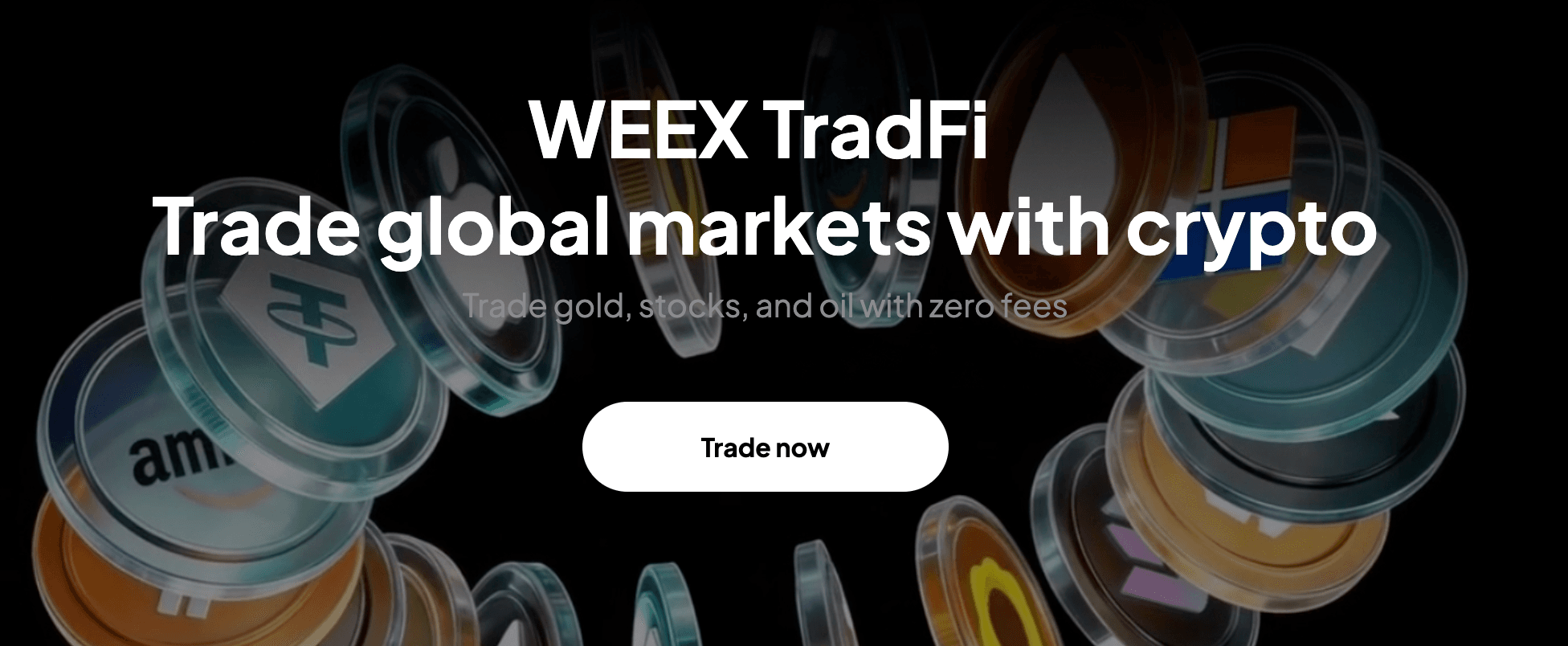
This is especially useful for traders who already understand USDT-margined contracts. The same trading habits, account logic, and risk controls can be applied to assets beyond crypto.
New users can first register on WEEX, complete the required account steps, and prepare funds for supported trading products.
Why Traders Use WEEX TradFi
WEEX TradFi can help users diversify their market exposure. When crypto volatility slows down, commodities or indices may still provide active trading opportunities. When macro news affects the dollar, oil, gold, or equities, traders can respond without moving capital to another platform.
Common reasons users explore WEEX TradFi include:
- USDT-based margin
- Access to global asset categories
- No traditional brokerage account requirement
- Faster movement between crypto and traditional asset contracts
- One platform for multiple market themes
- Familiar futures-style trading tools
If users need USDT before trading, Quick Buy on WEEX can help them fund their account through supported payment options.
What Makes WEEX TradFi Different from a Traditional Broker?
The biggest difference is the account experience. A traditional broker is usually built around fiat deposits, local market access, separate settlement systems, and traditional trading sessions. WEEX TradFi is built around crypto users, USDT collateral, and futures-style execution.
That means users do not need to treat gold, oil, or stock-related products as a completely separate workflow. They can use a familiar interface, manage collateral in USDT, and switch between crypto futures and TradFi products more efficiently.
This unified structure is useful for traders who monitor both crypto market cycles and macro market trends.
Supported Market Categories
WEEX TradFi focuses on major global asset categories such as precious metals, energy, stock-related products, indices, and commodities.
| Market Category | Examples | Why Traders Watch It |
|---|---|---|
| Precious metals | Gold, silver | Inflation, uncertainty, macro sentiment |
| Energy | Crude oil, natural gas | Supply, demand, geopolitical events |
| Stocks | Selected stock-related products | Company and sector trends |
| Indices | Global market indices | Broader equity market direction |
| Commodities | Major commodity contracts | Real-world demand and macro cycles |
Gold-focused traders may also review PAXG/USDT perpetual futures as one example of how crypto infrastructure can connect with traditional asset exposure.
Product availability, leverage, fees, and trading rules may vary by contract, so users should always check the live trading page before opening a position.
Using USDT as the Trading Bridge
USDT is central to the WEEX TradFi experience. It allows users to keep their account value in a crypto-native settlement asset while accessing traditional market price movements.
For example, a trader can hold USDT, trade crypto futures, then shift part of their strategy toward gold, oil, or index products when macro conditions change. This flexibility is one of the strongest reasons TradFi products are becoming more relevant to crypto users.
Beginners can also check WEEX Welcome Rewards before starting, since eligible new users may have platform tasks or rewards available.
Risk Management Comes First
TradFi products can feel familiar, but they still carry serious risk. Leverage can amplify both gains and losses. Price gaps, low-liquidity periods, funding costs, and sudden news events can affect positions quickly.
Before using WEEX TradFi, traders should define position size, choose leverage carefully, understand liquidation rules, and avoid using funds they cannot afford to lose. Traditional assets may seem more stable than some altcoins, but leveraged contracts remain high-risk trading instruments.
Conclusion
WEEX TradFi gives crypto traders a direct way to access global market opportunities with USDT. By combining traditional asset exposure with a crypto-native trading workflow, WEEX makes it easier to trade gold, oil, stocks, commodities, and indices from one platform.
For users who want broader market access without leaving the crypto ecosystem, WEEX TradFi offers a practical bridge between digital assets and traditional finance.
Disclaimer: This article is for informational purposes only and does not constitute financial advice. Trading digital assets, futures, and leveraged products involves significant risk and may result in loss of capital.
You may also like

FLR Token Price Analysis: Flare XRP Yield Growth
FLR token price has moved higher as Flare Network continues rolling out ecosystem upgrades tied to XRP liquidity and DeFi expansion. This guide breaks down the latest FLR token price analysis, what is driving trading activity, how the Flare ecosystem is evolving, and whether current momentum could continue in the near term.

Is Polymarket Legal? Global Access and Regulation Guide
Is Polymarket legal? This guide explains how Polymarket works, why prediction market rules differ by country, and how global regulation affects access to event-based trading platforms in crypto and digital finance.

How Prediction Markets Work Bitcoin Forecasting?
Can prediction markets predict Bitcoin prices, or just reflect trader expectations? This guide explains how Bitcoin prediction markets work, how pricing is formed, and how platforms like Polymarket track real-time market sentiment in crypto.

Fidelity Oil United Reserve (FOUR): Oil Reserve Meme Coin Explained
Learn what Fidelity Oil United Reserve (FOUR) is, whether it is oil-backed, how to verify the contract, and which risks matter before trading.

ISOR Coin Explained: Oil-Themed Solana Token Risks
ISOR coin explained: what the Iran Strategic Oil Reserve token is, why oil-themed Solana memes are trending, and the risks to check before trading.

Le Bon Coin and Crypto Scams: What Buyers Should Know
Learn what Le Bon Coin is, how leboncoin secure payment works, why crypto payment requests are risky, and how to spot marketplace scams.
SLX Token Price Today: Solstice Launch Volatility Explained
SLX token price is trading near $0.18-$0.20 after Solstice’s volatile launch. Here is what traders should watch next.

What is Supergemma4-26b-multimodal (SUPERGEMMA) Coin?
In a new milestone, the Supergemma4-26b-multimodal (SUPERGEMMA) token pair has been freshly listed on WEEX, offering exciting trading…

What is Nexus (NEX) Coin?
Nexus (NEX) Coin, now newly listed on WEEX as of May 25, 2026, represents a cutting-edge advancement in…

What's Special about SAOS Crypto? The Most Complete Guide to Strategic American Oil Supply (SAOS) in 2026
What is SAOS crypto? Learn how Strategic American Oil Supply works on Solana, why SAOS is trending, latest market cap, holders, volume, tokenomics, and whether it is a meme coin or oil-backed asset.
What Is Render (RENDER) Crypto and How Does It Work? A Complete Guide to the Decentralized GPU Network
What is Render (RENDER) crypto and how does it work? Learn how Render Network powers decentralized GPU rendering, RENDER token utility, RNDR to RENDER migration, AI workflows, and Burn Mint Equilibrium.

What is OpenHuman (OPENHUMAN) Coin – The AI-Powered Revolution
OpenHuman (OPENHUMAN) Coin has recently made its debut on WEEX Exchange, sparking interest among crypto enthusiasts eager to…

What is Pitch World Cup (PITCH) Coin? Everything You Need To Know Before Trading
Pitch World Cup (PITCH) Coin is a crypto-native card trading ecosystem built for the 2026 World Cup, and…
What is Pitch World Cup (PITCH) Coin
In the ever-evolving world of cryptocurrencies, another intriguing token, Pitch World Cup (PITCH), has made its debut. As…
venice token price prediction Price Prediction October 2026: Can VVV Extend Its AI Privacy Rally After an 18% Daily Surge?
Venice Token (VVV), the “privacy coin for AI” powering Venice.ai on Base, has jumped 18.01% in the last…
venice token price prediction Price Prediction & Forecast for May 2026: VVV Rallies on Base—What’s Next?
As of 07:14 UTC on May 25, 2026, Venice Token (VVV) trades at $17.12 with a market cap…

Futu drop 40% After Crackdown: WEEX vs Traditional Brokers Guide
The Futu crackdown has triggered major changes in cross-border investing. This article explores the impact of the Futu crackdown, the rise of alternative platforms, and how WEEX compares with traditional brokers while offering a zero-fee deposit model to reduce trading costs.

How Prediction Market Works?A Complete Guide to Pricing and Mechanisms
Prediction markets allow users to trade probabilities based on future events rather than traditional assets. This article explains how prediction markets work, how prices are formed, and how platforms like Polymarket use real-time trading to reflect collective expectations across global events.
FLR Token Price Analysis: Flare XRP Yield Growth
FLR token price has moved higher as Flare Network continues rolling out ecosystem upgrades tied to XRP liquidity and DeFi expansion. This guide breaks down the latest FLR token price analysis, what is driving trading activity, how the Flare ecosystem is evolving, and whether current momentum could continue in the near term.
Is Polymarket Legal? Global Access and Regulation Guide
Is Polymarket legal? This guide explains how Polymarket works, why prediction market rules differ by country, and how global regulation affects access to event-based trading platforms in crypto and digital finance.
How Prediction Markets Work Bitcoin Forecasting?
Can prediction markets predict Bitcoin prices, or just reflect trader expectations? This guide explains how Bitcoin prediction markets work, how pricing is formed, and how platforms like Polymarket track real-time market sentiment in crypto.
Fidelity Oil United Reserve (FOUR): Oil Reserve Meme Coin Explained
Learn what Fidelity Oil United Reserve (FOUR) is, whether it is oil-backed, how to verify the contract, and which risks matter before trading.
ISOR Coin Explained: Oil-Themed Solana Token Risks
ISOR coin explained: what the Iran Strategic Oil Reserve token is, why oil-themed Solana memes are trending, and the risks to check before trading.
Le Bon Coin and Crypto Scams: What Buyers Should Know
Learn what Le Bon Coin is, how leboncoin secure payment works, why crypto payment requests are risky, and how to spot marketplace scams.


